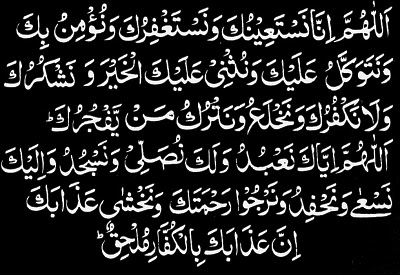
After
ensuring that your belief and faith is correct, the biggest obligation
of all obligations is Namaz. There has been many messages in the Quran
and Hadith in relation to the importance of Namaz. Whoever does not
believe it as an Obligatory aspect i.e. Farz is a Kafir. and those who
do not pray it are great sinners and will be thrown into hell in the
after life, also in the event of an Islamic leadership, the king should
execute those who do not pray Namaz.
Rule: At what age should children be taught Namaz ?
When a child reaches the age of seven he should be shown how to pray Namaz. When the child reaches the age of ten. they should be made to pray via use of beatings. Before we show you the way in which Namaz should be prayed, we will first of all show you the six conditions/qualifiers that must be performed, otherwise the Namaz will not begin.
These are known as the 'Shara'it-e-Namaz and are as follows
Cleanliness
The covering of the body
Time
Facing Qibia
Intention
The call to start Namaz (Takbeer-e-Tahrima)
The
first qualification is cleanliness. This means that the person praying
Namaz (which will now be referred to as Namazee) must have their body,
clothing and the place where Namaz is going to be performed, clean from
impurities such as urine, stools, blood, alcohol. dung, animal
excretion, etc. Also the Namazee must not be without bathing or
ablution.
The second qualification is covering of the body. This means that the male's body must be covered from the navel upto and including the knees. The female's body must be completely covered except for the face, the hands below and including the wrists and feet below and including the ankles.
The third qualification is time. This means that whatever time is allocated to a particular Namaz, that Namaz is prayed. For example, the Fajr Namaz is prayed from the break of dawn to before sunrise. Zohar Namaz is prayed after midday to the time when there are two shadows to everything except for the original shadow (mid afternoon). Asr Namaz is prayed from when there are two shadows until sunset. Maghrib Namaz is prayed after sunset to when the natural light disappears. Isha Namaz is prayed after the natural light has disappeared until before the break of dawn.
The fourth qualification is the facing towards Qibla. This means to face towards the Holy Ka'aba (in Makkah).
The fifth qualification is intention. This means that whatever Namaz is being prayed for whatever time i.e. Ada, Qaza. Farz, Sunnat,Nafl etc. to make a firm intention in the heart for that Namaz.
The sixth qualification is Takbeer-e-Tahrima. This means to say Allah-o-Akbar and start the Namaz. This is the last qualification and once said the Namaz begins. If you then say something to someone or eat something or drink something or perform any action which is against Namaz then the Namaz will break. The first five qualifications must remain from when the Takbeer-e-Tahrima is said, to until the Namaz is completed, otherwise the Namaz will not count.
SECOND QUALIFICATION ON NAMAZ - SATRE-AURAT - COVERING OF THE BODY
It is compulsory to cover the body, meaning how much of the body in Namaz should be covered at least.
Rule: For males, from below the naval to below the knees is compulsory, that it is covered, it is not compulsory to cover the naval, but the knees must be covered.
Rule:
For women who are not slaves nor have any restriction of Shariat on
them, it is compulsory for them to cover all their body except the face,
hands upto the wrists and feet upto the ankles. It is also compulsory
for women to cover the hair hanging from their heads, their necks and
their collars (throats).
Rule: If a woman has worn a very thin veil over her head that the hair's shininess can be seen then the Namaz will not count.
Rule:
For a female servant/slave the whole of the stomach, back, both sides
and from the navel to the knees is all aurat (parts that need covering).
Rule:
In all the parts that are compulsory to cover if one part was uncovered
and was less than a quarter, then the Namaz will count. If it is a
quarter in size and is recovered immediately, then the Namaz will count.
If the part was uncovered for one 'Rukun' meaning the time you could
say Subhanallah three times or was uncovered deliberately and whether it
was covered again immediately, the Namaz will not count.
Parts of Aurat in a Male
Rule: There are nine parts of the body which are aurat for a male.
The penis
Both testicles
Posterior
The right hip
The left hip
The right thigh (upto and including the knee)
The left thigh (upto and including the knee)
From below the naval upto the male organ and upto both sides of the body inclusive.
The area between the testicles upto the posterior is a single aurat.
The
aurats that have been counted above are all one part each, meaning if
less than a quarter of each part became uncovered, the Namaz would
count.
Rule: If some parts of the aurats became uncovered but were all less than a quarter, however, when added together the size would be more than a quarter of the smallest part that has been uncovered, then the Namaz will not count. For example, if a ninth of a thigh was uncovered, a ninth of hip and a ninth of a penis was uncovered then the size added together is more than a quarter of the penis, the Namaz will not count [Alamgiri, Radd-ul-Mohtar].
Rule: At the start of the Namaz if one quarter of a part is left uncovered and you say Allah-o-Akbar, the Namaz will not start [Radd-ul-Mohtar].
Aurat parts for a woman
Rule: For women who are not slaves, except for the five parts mentioned above (face, both hands upto the wrists and both feet upto the ankles) all the body is aurat. This is split into thirty parts of the body. The same rule applies in Namaz (as mentioned above) if a quarter became uncovered for each part.
The head, meaning from the top of the head upto the start of the neck.
The hair that hangs down
The right ear
The left ear
The neck (and throat)
The right shoulder
The left shoulder
The top right arm including the elbow
The top left arm including the elbow
The bottom right arm (below the elbow upto and including the wrist)
The bottom left arm (below the elbow upto and including the wrist)
The chest, below the neck/throat to the breasts
Back of the right hand
Back of the left hand
The right breast
The left breast
The stomach, meaning from below the breasts upto and including the navel
The upper back, meaning the other side of the chest
Both armpits upto the lower back
The right hip
The left hip
The vagina
The posterior
The right thigh upto and including the knees, the knee is not a separate part but is included
The left thigh upto and including the knees, the knee is not a separate part but is included
Below the naval upto the start of the pubic hair and the lower back, is all one aurat.
The right shin, from below the knee upto and including the ankle
The left shin, from below the knee upto and including the ankle.
The right base of the foot
The left base of the foot
Many Ulema have not included the back of the hands and the base of the feet as Aurat.
Rule: Although the woman's face is not an Aurat, it is still forbidden to expose it to non permissible males (those a woman is not restricted to marry). Also it is forbidden for non permissible males to look at their face.
Rule: If a male does not have clothing that is allowed, i.e. he only has silk to cover his body, then it is obligatory for him to cover his body with the silk cloth and can pray Namaz with it on, however, if a male has other material available then it is Haram for a male to wear silk, and if a Namaz is prayed with silk on, then it will become Makrooh-e-Tahrimi.
Rule:
If a naked person can obtain access to a table or floor cloth, then
they must cover themselves with this and pray Namaz, and also if they
can use leaves or straw to cover themselves, then they must do this
[Alamgiri].
Rule: If someone has no clothes or material, then they should pray Namaz seated and perform Rukoo and prostration (Sijdah) by actions [Hidaya, Durr-e-Mukhtar, Radd-ul-Mohtar].
Rule: If another person has material or clothing and the naked person feels sure that the person will lend it to them, then it is necessary to ask for the material [Radd-ul-Mohtar].
Rule:
If you only have impure clothes and there is no way of cleaning them,
then pray with the impure clothes, do not pray naked [Hidaya].
Rule: If there isn't enough clothing to cover the whole of the body but you can only cover some parts, then it is necessary that you do this and cover the private parts (vagina and posterior) first. And if there is only enough to cover one private part, then cover one of the two.
Rule: If by praying Namaz whilst standing, one quarter of an aurat becomes uncovered, then pray Namaz whilst seated [Durr-e-Mukhtar, Radd-ul-Mohtar].
THIRD QUALIFICATION OF NAMAZ - TIME
Time of Fajr
From the break of dawn upto the first ray of sunrise. The break of dawn (Subah Sadiq) is a light which is seen before sunrise from the east and generally gets more lighter and eventually is spread completely across and then it becomes daylight. As soon as this light of the break of dawn is seen, the time of sehri for fasting finishes and the time of Fajr Namaz begins. Before this light a seam of whiteness is seen in the middle of the sky from east to west, and underneath it the whole is area is black.
The break of dawn comes from underneath this and spread across to the north and south and gets lighter. The whiteness disappears when the light of dawn starts spreading. The long whiteness is known as Subah Kazab and the time of Fajr does not begin with this [Qazi Khan, Bahar-e-Shariat].
(The time of Subah Sadiq is dependent upon the town and country you are in. It is advisable to get the time from the observatory).
Rule: For the time of Fajr Namaz wait until the break of dawn starts spreading and it's light can be seen, and the finishing of Sehri and the end of Isha Namaz time is as soon as the break of dawn starts, meaning pray the Fajr Namaz at least after the light of the break of dawn can be seen and end the Sehri and the time of Isha once the break of dawn occurs [Alamgiri].
Time of Zohr
From Zawal, meaning midday until everything has except for it's original shadow a double shadow. For example, there was a shadow in the afternoon of an item the size of four fingers and the item is actually eight fingers in size, the time of Zohr will not finish until the size of the shadow gets to twenty fingers in length.
The original shadow is the shadow which occurs exactly at midday. This is when the sun reaches exactly middle of the sky and the distance of east and west is exactly the same. When the sun moves from this position slightly to the east, the time of Zohr begins. The recognition of the sun moving is by digging a stick upright into the ground, and then the shadow continues to reduce until it cannot reduce anymore, this is exactly the time of midday and is known as the original shadow, when the shadow starts growing again the time of Zohr has begun because the sun has moved. The time of Jum'a is the same as the time of Zohr.
Time of Asr
As soon as the time of Zohr finishes, the time for Asr begins. Depending upon the city and country, the length of Asr varies. The length of the time of Asr is also dependent on the time of the season, i.e. autumn, summer etc.
Time of Maghrib
As soon as the sun sets until the dusk (Shafaq) disappears. Dusk is the twilight that is seen after the redness of the sun has gone and is spread like the whiteness of dawn from east then from north to south [Hidaya, Alamgiri, Khanya]. In the UK the length of Maghrib is usually approximately a minimum of one hour and fifteen minutes and a maximum of one and a half hours. The length of the time of Maghrib is exactly the same as the time length of Fajr for that day.
Time of isha
As soon as the twilight of dusk disappears the time of Isha begins until the break of dawn. As well as the twilight of dusk, there is also a twilight seen after this from north to south but the time of Isha has begun and the time of Maghrib has ended.
Time of Witr
The time of Witr is the same as the time of Isha. However, Witr cannot be prayed before the Farz Namaz of Isha, as the sequencing is obligatory. If the Namaz of Witr is prayed purposely before the Farz Namaz of Isha, then the Witr will not count and will have to be prayed again after the Farz Namaz of Isha. However, if the Witr Namaz is prayed before Isha by mistake or you have realised that you prayed the Isha Namaz without Wuzu and prayed the Witr Namaz with Wuzu, then it is accepted [Durr-e-Mukhtar, Alamgiri].
Rule: In those countries where the time of Isha does not come, then the Qaza of Isha and Witr should be prayed [Bahar-e-Shariat].
MUSTAHHAB TIMES OF NAMAZ
In Fajr, delaying is Mustahhab (Preferred). Meaning when there is good light then start the Namaz. Also Mustahhab time is that you can pray approx. forty to sixty verses of the Quran in a clear and distinct manner (tarteel), and after performing Salaam there is enough time left that if there was a fault you could repeat your Wuzu and pray the Namaz again with forty or sixty verses in a clear and concise manner. To delay so much that there is doubt that the sun will rise is Makrooh disliked) [Qazi Khan etc.].
Rule: For women it is always Mustahhab to pray Fajr at the beginning time and the rest of the Namaz's prayed after the Jamaat of the males has completed.
Rule: In winter, early Zohr is Mustahhab. In the warm weather it is Mustahhab to pray the Namaz late, whether it is prayed alone or with Jamaat. However, in the warm weather, if the Jamaat of Zohr is early, you are not allowed to miss it for the Mustahhab time. The season of autumn is in the same rule as winter, and the season of spring is in the same rule as summer [Radd-ul-Mohtar, Alamgiri].
Rule: The Mustahhab time of .Jum'a is the same as the Mustahhab time of Zohar [Hijr].
Rule: It is Mustahhab to delay the Asr Namaz, but not too much that the rays of the sun go deep red and that without any difficulty you could look directly at the sun, the sun shining is not a form of deep redness [Alamgiri, Radd-ul-Mohtar, etc.].
Rule: It is better that you pray Zohr in the first half of it's time and Asr in the second half of it's time [Guniya].
Rule: From study it is apparent that the sun goes deep red twenty minutes before sunset and also it stays red twenty minutes after sun rise, which is the out of Namaz time [Fatawa-e-Razvia, Bahar-e-Shariat].
Rule: The clarification of delay is that the time allocated for a particular Namaz is split into two and then the Namaz is prayed in the second half.
Rule: Except for the days when there is cloud, it is always Mustahhab to start Maghrib quickly, and if the time is delayed for more than the length of two rakats then it is Makrooh-e-Tanzihi. Also, if without cause i.e. travelling, illness etc. if the time is delayed so that the stars can be seen clearly, then this is Makrooh-e-Tahrimi [Durr-e-Mukhtar, Alamgiri, Fatawa-e-Razvia].
Rule: It is Mustahhab for Isha Namaz to be delayed for the first third part of the time. It is allowed to be prayed after the first half of the time, meaning you prayed the Farz rakats just before the first half ended, and if delayed that the night had dropped (meaning after the first half) then this it is Makrooh as it would mean missing Jamaat (congregation) [Hijr, Durr-e-Mukhtar, Khaniya].
Rule: It is Makrooh to sleep before praying the Isha Namaz.
Rule: After the Isha prayer it is Makrooh to talk about worldly things, to tell or listen to stories or fables. It is not Makrooh to talk about important issues, to pray the Quran, or recite Allah's name, or talk about religious regulations, stories of pious people and to talk with guests. Also, from the break of dawn upto sunrise all types of conversation except to recite the name of Allah is Makrooh [Durr-e-Mukhtar, Radd-ul-Mohtar] .
Rule: If a person is confident in waking up then they should pray the Witr Namaz in the last part of the night just before sleeping and then if they wake up in the last part of the night they should pray Tahajjud, they cannot pray Witr again [Qazi Khan].
Rule: During dull and cloudy days it is Mustahhab to pray the Asr and Isha Namaz early and Mustahhab to delay the other Namaz's.
MAKROOH TIMES
Whilst the sun is rising or setting and at exactly midday, at these three times no Namaz is allowed. No Farz, no Wajib, no Nafl, no Ada (current), no Qaza (expired), no Sijdah-e-Tilawat, No Sijdah-e-Sahoo. However, if the Asr Namaz for that day is still left to pray then you must pray whether the sun is setting, but to delay it for so long is Haram.
Rule: Sun rising means from the edge of the sun has come out until all the sun has risen and the eye sparkles when directly looked at, and this is a total time of twenty minutes.
Rule: Midday (Nisfun Nihar) means starting from exact mid sun until the sun drops.
Rule: The way of finding the exact time of Nisfun Nihar (midday) is to find out what day today the break of dawn started and what time the sun set. Split this into two halves and as soon as the first half ends this is the time of midday until the sun starts dropping from this position.
For example, say today the 20th March the sun sets at 6pm and also risen at 6am, then the afternoon started at 12pm, and in the morning at 4.30am the dawn broke. Therefore a total of thirteen and a half hours have occurred between the break of dawn until sun set and so half of it would be six and three quarter hours. The time therefore of Nisfun Nihar would be quarter past eleven and the sun would drop at 12pm, and hence a total of three quarters of one hour would be the total time when any Namaz would not be allowed.
Notice:
The above calculation is a mere example and therefore the time would
differ according to the city and country and the season. Different
destinations and different times show that the approximate time would be
twenty minutes and in all places the above method of calculation should
be used.
Rule: If a funeral (Janaza) is brought at the three prohibited times there is no harm in praying the Namaz. It is not allowed to be prayed when all the funeral is ready beforehand and the time is delayed until the prohibited times start [Alamgiri, Radd-ul-Mohtar].
Rule:
During these three prohibited times it is better if you do not pray the
Holy Quran, it is better to recite the name of Allah or pray the Durood
Sharif continuously [Alamgiri].
Twelve times where Nafl Namaz is prohibited
Rule: It is prohibited to pray Nafl (voluntary) Namaz during twelve times;
From the break of dawn (SubahSadiq) until the sun has risen fully, no Nafl Namaz is allowed, except for the two Sunnats of Fajr. From when the call to establish rows for congregation (Iqamat for Jamaat) until the Farz Namaz finishes, to pray a Nafl or Sunnat is Makrooh-e-Tahrimi. However, if the Jamaat of Fajr Namaz has stood up and you know that if you pray the Sunnats of Fajr you will still be able to join the Jamaat, whether it be in the last sitting position (Qaida) it is necessary that you pray the Sunnats separately from the rows of Jamaat and then join the Jamaat.
If you know that if you start the Sunnats you will not be able to join the Jamaat but you still start the Sunnats then this is forbidden and a sin. Except for the Fajr Namaz it is not allowed to start a Sunnat even if you know you can join the Jamaat late when the Iqamat has been called for Jamaat.
After praying the Asr Namaz until the sun goes red, no Nafl Namaz is allowed.
As soon as the sun has set, until the Farz Namaz of Maghrib has been prayed, no Nafl is allowed [Alamgiri, Durr-e-Mukhtar].
From the time in Juma the Imam stands up from his place to perform Khutba until the Farz Namaz of Juma has been prayed, no Nafl is allowed.
At the start of a Khutba (sermon), whether it is the first or the second for Juma, Eids, Kusoof, Istisqa, Hajj or Nikah, all Namaz is not allowed even Qaza Namaz. However, for Sahib-e-Tarteeb (those who have less than five Namaz of Qaza due) at the start of the Juma Khutba, Qaza Namaz is allowed [Durr-e-Mukhtar].
Rule:If the Sunnats of Juma have been started and the Imam stands up for the Khutba, then complete all four rakats of the Sunnat.
All Nafl Namaz is Makrooh before the Eid Namaz, whether you pray them at home, Mosque or Eid hall [Alamgiri, Durr-e-Mukhtar.
It
is Makrooh to pray Nafl Namaz after the Eid Namaz if they are prayed at
the Eid hall or Mosque, if they are prayed back at home then they are
not Makrooh [Alamgiri, Durr-e-Mukhtar].
At Arafat, where the Zohr and Asr is prayed together, to pray a Nafl or Sunnat in between them or after them is Makrooh.
In Muzdalifa, where the Maghrib and Isha is prayed joined together, it is Makrooh to pray any Sunnat or Nafl Namaz in between the two Namaz, it is not Makrooh to pray Nafl after the Isha Jamaat [Alamgiri, Durr-e-Mukhtar].
If the time of Farz is very short, then all Nafl and Sunnats including those of Fajr and Zohr are Makrooh.
Whatever aspect that makes the heart distract and you can relieve yourself from that aspect then all Namaz are Makrooh until you relieve yourself, for example, urination or excretion or to release wind, then these must be performed otherwise the Namaz will be Makrooh. However, if the time is going to finish, then pray the Namaz and repeat it afterwards. Also if food is presented in front of you and you have the desire to eat, or any other aspect that you may have a desire for without which you will not be able to gain satisfaction, then it is necessary to fulfil this desire before praying Namaz otherwise the Namaz will be Makrooh [Durr-e-Mukhtar, etc.].
Rule: The whole of the time of Fajr and Zohr is okay from the start to the end, meaning these Namaz can be prayed at any point within the time and is not Makrooh [Bararaiq, Bahar-e-Shariat].
AZAAN (The reward of Azaan)
It is stated in the Hadiths that there is a lot of reward for Azaan. In one Hadith it is stated that the Holy Prophet has said "If people knew how much reward there is for calling the Azaan, then there would be fighting of swords between them [Riwa'al Hamd].
Rule: Azaan is a rule in Islam, meaning if within a city, town or village people stopped calling the Azaan, then the king within the Islamic country can force the people to call the Azaan and if they do not co-operate, then he can order to have them executed [Qazi].
Method of Azaan, it's contents and it's place
Position yourself outside the Mosque (Jamaat Khana), at a high place, facing the Qibla and place the index finger in each ear or cover the ears with the palm of the hand and say 'Allaho Akbar, Allaho Akbar', Both of these statements make one submission. Then pause slightly and repeat again 'Allaho Akbar, Allaho Akbar' again both of these statements make one submission. Then state twice 'Ashhadu An La ilaha illallah', then state twice 'Ashhadu Anna Muhammadanr Rasoolullah'. Then turn the head to the right and state twice 'Hayya Alas Salaah', then turn your head to the left and state twice 'Hayya Alal Falaah'. The turn your head back towards facing the Qibla and say once 'Allaho Akbar, Allaho Akbar' , this again is one submission, and then finally say once 'La illaha illallah'.
The Prayer after Azaan
After the Azaan has finished, first pray the Durood Sharif and then pray this Dua;
"Allahumma Rabba Hazihid Da'awat'it Ta'ammati, Wassalaatil Qa'ammati, Aati Sayyadi Muhammadanit Wasilata Wal Fadilata Wad Darajatar Rafi'ata, Wab'as'u Muqamam Mahmoodanil Lazi Wa'ad'tahu Warzukna Shafa'atahu Yawmal Qiyamati Innaka La Tukhiiful Mi'ad."
Rule: In the Fajr Azaan, after 'Hayya Alal Falah', also say twice 'Assalatu Khairum Minan Naum' as this is Mustahhab, and if it is not said, the Azaan will still count.
Which Namaz does Azaan have to be called for ?
Rule: All the five Farz Namaz and also the Juma Namaz where one goes into the Mosque to pray with Jamaat and is prayed at a designated time, then Azaan for these Namaz is Sunnat-e-Maukida, and it's order is the same a Wajib. If the Azaan is not called, then all the people from there are sinners [Khaniya, Hindiya, Radd-ul-Mohtar, Durr-e-Mukhtar].
The order of Azaan
Rule: If someone prayed Namaz at home and did not call the Azaan then there is no problem because the Azaan at Mosque would be sufficient for them. Although it is Mustahhab to say the Azaan at home.
When should the Azaan be called ?
Rule: The Azaan must be called after the time for that Namaz has begun. If the Azaan is called before the time then it must be called again [Qazi Khan, Shareh Waqiya, Alamgiri].
The time of Azaan
Rule: The time of Azaan is the same as the time of Namaz.
Rule: The Mustahhab time of Azaan is the same as the Mustahhab time of Namaz.
Rule: If the Azaan was called at the start of the time and the Namaz is prayed towards the end of the time, then the Sunnat will still be fulfilled [Durr -e-Mukhtar,` Radd-ul-Mohtar].
Which Namaz do not contain Azaan
Rule: Except for the Farz Namaz's no other Namaz have the Azaan, Not for Witr, or Janaza, or Eid, or Nazr (gift) Namaz, or Sunun (Sunnats) Namaz, or Rawatib (traditional), or Tarawih (in Ramadan), or Istisqa (Thankful) Namaz, or Chast (mid morning), or Kusoof or Khusoof (sun or moon eclipse) or any Nafl Namaz [Alamgiri].
Order of Azaan for women
Rule: It is Makrooh-e-Tahrimi for women to call the Azaan or Iqamat. If a woman calls the Azaan she will be sinful and the Azaan will have to be called again.
Rule: It is Makrooh to call the Azaan for women Namaz Ada or Qaza, whether it is prayed by Jamaat, although their Jamaat itself is Makrooh [Durr-e-Mukhtar, etc.].
Order of Azaan for children, blind people and those without Wuzu
Rule: The Azaan called by a clever child, or a blind person or a person without Wuzu is correct and permissible [Durr-e-Mukhtar]. However, to call the Azaan without Wuzu is Makrooh [Miraqul Falah].
Rule: In a city during the day of Juma (Friday) it is not allowed to call the Azaan for Zohr Namaz, whether some people are excluded from praying Juma and are praying Zohr because the Juma Namaz is not Farz for them [Durr-e-Mukhtar, Radd-ul-Mohtar].
Who should say the Azaan?
Rule: Azaan should be called by those who recognise the times of Namaz. Those who do not recognise the Namaz times are not worthy of gaining the reward of Azaan which is gained by the Moazzin [Bazazia, Alamgiri, Gunya, Qazi Khan].
Rule: It is better.if the Imam calls the Azaan [Alamgiri].
Order of talking between the Azaan
Rule: To talk between the Azaan is prohibited and if you (the Moazzin) did talk the Azaan has to be called again [Sagiri].
Rule: To perform a melody in Azaan is Haram, meaning to sing the words like a song. Or to change the words of the Azaan such as to change the word Allah to Aallah due to melody, or to change the word Akbar to Aakbar or Akbaar is all Haram. However, it is better to call the Azaan in a sweet sharp voice [Hindiya, Durr-e-Mukhtar, Radd-ul-Mohtar].
Rule: If the Azaan is called quietly then it should be called again and the first Jamaat is not the Jamaat-e-Ula (main Jamaat) [Qazi Khan].
Rule: The Azaan should be called in a minaret or outside the Mosque, do not call the Azaan in the mosque (Jamaat hall) [Khulasa, Alamgiri, Qazi Khan].
The Answer to Azaan
When you hear the Azaan, it is an order to reply to it. Meaning whatever the Moazzin calls reply back with the same submission. The only exceptions are 'Hayya Alas Salah' and 'Hayya Alal Falaah', where the reply is 'La Hawla Wala Quwwata ilia billah' and it is better if you say both (meaning Hayya......and La Hawla....). Also add this onto it 'Mashaa Allaho Kaana Wamaalam Yashaa Lam Yakun' [Radd-ul-Mohtar, Alamgiri].
Rule: In reply to 'Assalato Khairum Minan Naum' the following is to be said 'Sadaqta Wa Bararta Wa bil Haqqi Nataqta'[Durr-e-Mukhtar, Radd-ul-Mohtar].
Stop all activities whilst the Azaan is being called
Rule: A Junub should also reply to the Azaan. It is not Wajib for a women in her period or is still bleeding after childbirth, or a person who is listening to the Khutba, or a person praying the Namaz of Janaza, or a person engaged in sexual intercourse, or a person in the toilet to reply to the Azaan.
Rule: Whilst the Azaan is being called, all talking, greeting and reply to the greeting should be stopped, and all other occupations should be stopped, even the recitation of the Quran should be stopped if the sound of Azaan is heard and it should be listened and replied. The same rule applies for Iqamat [Durr-e-Mukhtar, Alamgiri]. Those who remain busy in chit chat, their death will be bad (Muazallah) [Fatawa-e-Razvia].
Rule: If you are walking and you hear the sound of Azaan, then stop and listen to it and reply back [Alamgiri, Bazazia].
IQAMAT
Rule: Iqamat is the same example as the Azaan. Meaning the rules that have been stated for Azaan also apply to Iqamat. However, there are a few differences. In Iqamat after 'Hayya Alal Falah' also say 'Qad Qamatis Salaat' twice. Also the volume whilst calling the Iqamat should be loud but not as loud as the volume for Azaan. But loud enough so that all that are present can hear.
The words andsubmissions of Iqamat should be said quickly without a pause and you should not cover your ears with your hands or put your fingers into your ears when calling the Iqamat, you should not say 'Assalatu Khairum Minan Naum' in the morning Iqamat and the Iqamat should be called from inside the Mosque (Jamaat Khana).
Rule: If the Imam called the Iqamat, then when he calls 'Qad Qamatis Salaat', he should move forward to the Imam prayer mat (Musalla) [Durr-e-Mukhtar, Radd-ul-Mohtar, Guniya, Alamgiri, etc.].
Rule: In Iqamat, you should also move your head when saying 'Hayya Alas Salah and Hayya Alal Falah' to the right and left [Durr-e-Mukhtar].
Rule: If someone came during the time of Iqamat, then for them to stand and wait is Makrooh, they should sit down and wait until the Mukabbir (caller of Iqamat) says 'Hayya Alal Falah' then stand up. The same rule applies to those already present, they should not stand until 'Hayya Alal Falah' is called and the same order also applies to the Imam [Alamgiri]. Nowadays there has been a tradition made that until the Imam does not stand on his prayer mat the Iqamat is not started, this is against the Sunnat.
Rule: It is not allowed to speak between the Iqamat as it is not allowed to speak between the Azaan. Also for the Mo'azzin or Mukabbir, if some greeted them with a Salaam, then they should not reply and it is not Wajib for them to reply after the Azaan has finished [Alamgiri].
The Answer to Iqamat
Rule: It is Mustahhab to reply to the Iqamat. The reply to Iqamat is similar to the reply to the Azaan. The difference is, when replying to 'Qad Qamatis Salat' say 'Aqa Mahallahu Wa Ada Maha Wa Ja'alna Min Saalihi Ahliha Ah'Ya'aw Wa'Amawata' [Bahar-e-Shariat].
Rule: If you did not reply to the Azaan and there has not been a long duration gone by, then reply to it now [Durr-e-Mukhtar].
Rule: To reply to the Azaan of Khutba with the tongue is not allowed for the Muqtadees [Durr-e-Mukhtar].
Rule: It is Sunnat to leave a gap between the Azaan and the Iqamat, to call the Iqamat immediately after the Azaan is Makrooh. The gap for Maghrib is equivalent to three small verses or one big verse (Ayats). For the rest of the Namaz's the gap should be long enough so that those who regularly attend Jamaat arrive, however, it should not be left so long that the time of Namaz lapses.
FOURTH QUALIFICATION OF NAMAZ FACING TOWARDS THE QIBLA
The fourth qualifier for Namaz is facing towards the Qibla, meaning to point your face towards the Holy Ka'aba.
Rule: The Namaz is prayed for Allah and the Sijdah is performed for Him not for the Ka'aba. If Moazallah (Allah forgive) someone performed the Sijdah for the Ka'aba then he will be a grave sinner as it is Haram, and if someone performed the Sijdah with the intention of worshipping the Ka'aba then he is an open infidel as it is infidelity to worship someone other than Allah [Durr-e-Mukhtar, Ifaadat Zawia].
In what situations can Namaz be performed without facing the Qibia ?
Rule: If a person is helpless in facing towards the Qibia, then he should pray facing whichever direction he can, and he would not have to repeat the Namaz [Muniya].
Rule: If in illness you have not got enough strength to turn yourself towards the Ka'aba and there is no-one there that can assist you. then face whichever way you can and pray the Namaz and it will count.
Rule: If someone has their or someone else's goods in their possession and knows that if he faced towards the Qibia the goods would be stolen, then he can face whichever way suits him.
Rule: A person is travelling on a vicious animal and it is not letting him down or he can come down but without assistance he cannot mount the animal again, or is an old person and will not be able to mount the animal again and there is no-one who can assist him, then whichever direction he prays the Namaz will count.
Rule: If a person has the power to stop an animal or vehicle he is travelling in, then he should do this and if possible make it face towards the Ka'aba otherwise pray whichever way it is possible. If by stopping the animal the group he is travelling with will go out of sight, then he does not have to stop, pray whilst moving [Radd-ul-Mohtar].
Rule: If you are praying Namaz on a moving boat, then when saying the Takbeer-e-Tahrima face towards the Qibia and as the boat moves, you move keeping yourself pointing towards the Qibla [Guniya].
What if you don't know the direction of the Qibla ?
Rule: If you do not know the direction of the Qibia and there is no-one to show you, then think and wherever you think the Qibia is most likely to be pray Namaz that way, that is your Qibia [Muniya].
Rule: If you prayed Namaz by making an assumption and then later you found out that this was not the right direction for the Qibia, your Namaz will count and there is no need to repeat the Namaz [Muniya].
Rule: You are praying Namaz whilst making an assumption of the Qibia and whether you are in Sijdah and you change your mind or have been told of your mistake then it is compulsory that you change direction immediately, and the Namaz that has been prayed so far is not wrong, and similarly if you prayed four rakats in four directions then this is allowed. If you did not change direction immediately and there was a delay equivalent to saying 'Subhanallah' three times, then the Namaz will not count [Durr-e-Mukhtar, Radd-ul-Mohtar].
A Namazee turned his chest deliberately away from the Qibia whilst praying Namaz and whether he turned it back immediately, the Namaz will break. If he turned his chest away from the Qibia by mistake and turned back without the delay time of saying 'Subhanallah' three times then the Namaz will count [Muniya, Hijr].
Rule: If only the face turned away from the Qibia, then it is Wajib that it is turned back immediately and the Namaz will not break, however, to turn it away from the Qibia deliberately is Makrooh [Muniya].
FIFTH QUALIFICATION OF NAMAZ NIYYAT - INTENTION
Intention of Namaz
Niyyat means a fixed intention of the heart, only a thought or an indication is not sufficient until there is a fixed intention.
Rule: It is better if you say it with your tongue, for example, "I make the intention of two rakat Farz of Fajar Namaz, for Allah Ta'ala, my face towards the Ka'aba, Allah-o-Akbar."
Rule: It is necessary for a Muqtadee to make the intention of following the Imam.
Rule: If the Imam did not make the intention of being the Imam, the Namaz of the Muqtadees will count but they will not gain the reward of Jamaat (congregation) prayers.
Rule: The intention of Namaz-e-Janaza (funeral) is like this; "I make the intention of Namaz, for Allah Ta'ala, and prayer for this dead person, Allah-o-Akbar.